
Contents
- Learn German Fast: beginner to advanced in one place
- Learn German with Anja: start from the basics
- Deutsch lernen mit der DW: the strongest free structured course
- Easy German: the best for real spoken German at native speed
- DeutschLera: built for B1 and above
- What separates a useful German language learning channel from a popular one?
- Where Mile SEO fits in for teachers, tutors & course creators
1. Learn German Fast: beginner to advanced in one place
Learn German Fast splits its playlists into beginner, intermediate and advanced, then runs a separate set on everyday topics.
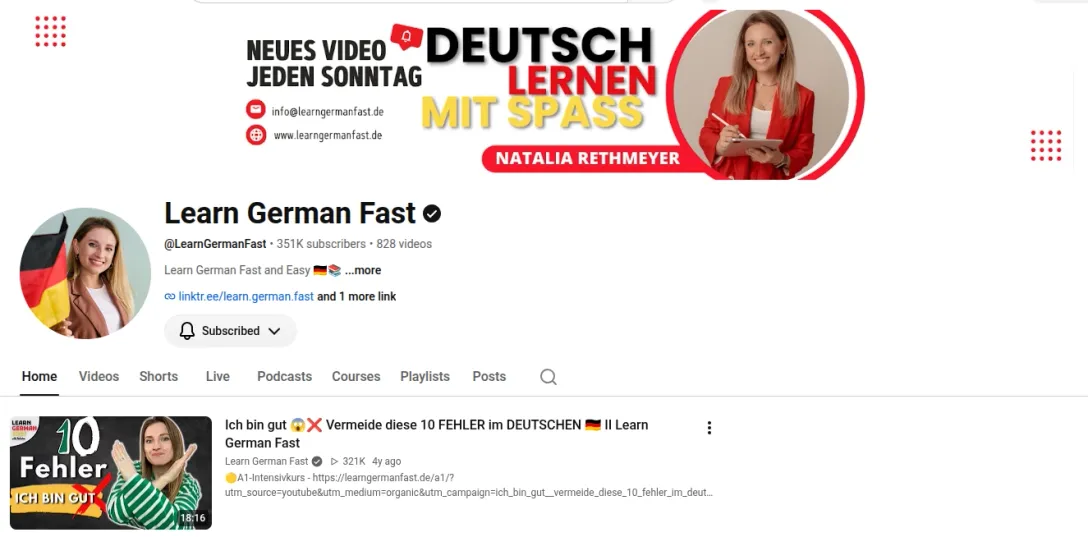
The teaching is structured like this: daily lessons, grammar in short segments, and vocabulary chosen for what you will actually use.
👉 Check out Learn German Fast YouTube channel
2. Learn German with Anja: start from the basics
Anja teaches German in German and puts the English translation on screen, which is the compromise for a beginner who cannot yet follow an explanation in the target language.
Her catalogue runs to several hundred videos from A1 and B1.
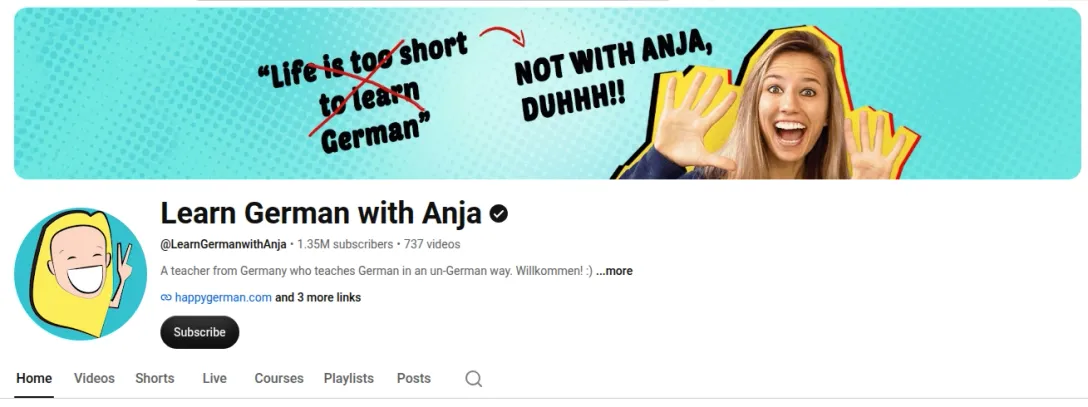
The channel is built on personality rather than syllabus. Lessons arrive wrapped in her own life (her house, her cat, her shopping). If you love bouncing on textbooks and structured lessons, this channel is not for you.
👉 Check out Learn German with Anja YouTube channel
3. Deutsch lernen mit der DW: the strongest free structured course
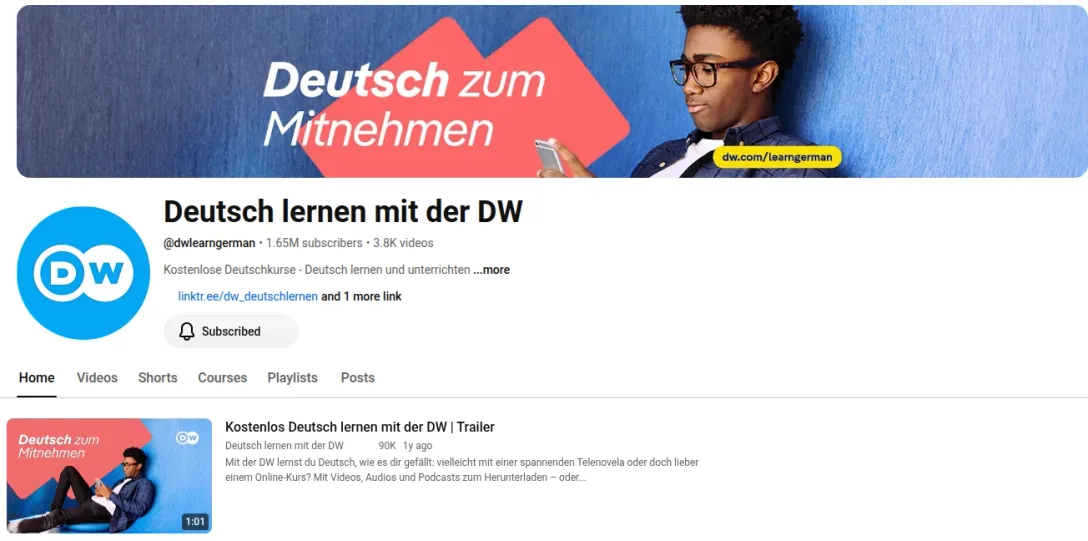
Deutsche Welle is Germany's public broadcaster, and its German courses are free, complete and built by people who teach for a living.
The YouTube channel is the video front end for a much larger library at dw.com, where the same courses come with worksheets, audio and transcripts to download.
Nicos Weg, a movie that follows a young Spaniard arriving in Germany and runs from A1 to B1 as a proper sequence is pretty famous in the language learning community because it combines (German) humour with actual learning materials.
The catch with DW is navigation…
The channel carries thousands of videos across several languages of instruction, so finding your series on YouTube is harder than starting from the DW site: it’s a familiar failure in content-led educational sites with deep archives and shallow signposting.
👉 Check out Deutsch lernen mit der DW YouTube Channel
4. Easy German: the best for real spoken German at native speed
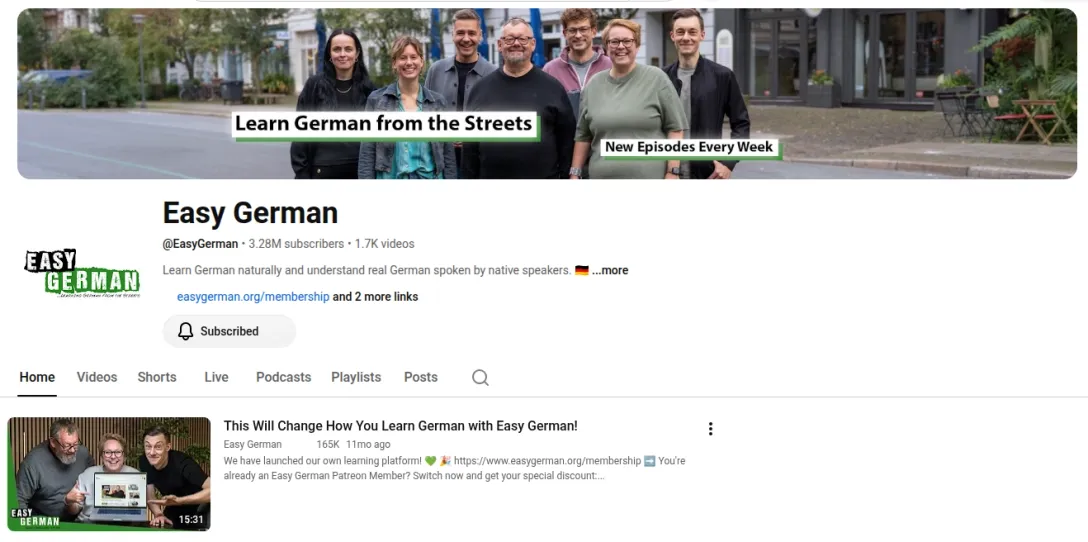
Easy German is the largest German-learning channel on YouTube, and it is for a good reason!
The format is (most of the time) street interviews across Germany, Austria and Switzerland, subtitled in German and English, so you hear how people really speak German.
That makes it the best listening resource on this list and a poor first stop. A true beginner will catch almost nothing at full speed; the Slow German series exists for that reason and is where to start below B1.
Around the free channel sits a membership with a structured learning path, exercises and a community, plus a separate podcast.
It is a really well-built example of what edtech platforms do with a free audience, and the free half stands up on its own.
👉 Check out Easy German YouTube channel
5. DeutschLera: built for B1 and above
Lera teaches at B1, B2 and C1, entirely in German.
The playlists divide by what advanced learners actually get stuck on:
- grammar,
- vocabulary,
- colloquial speech
- and pronunciation.
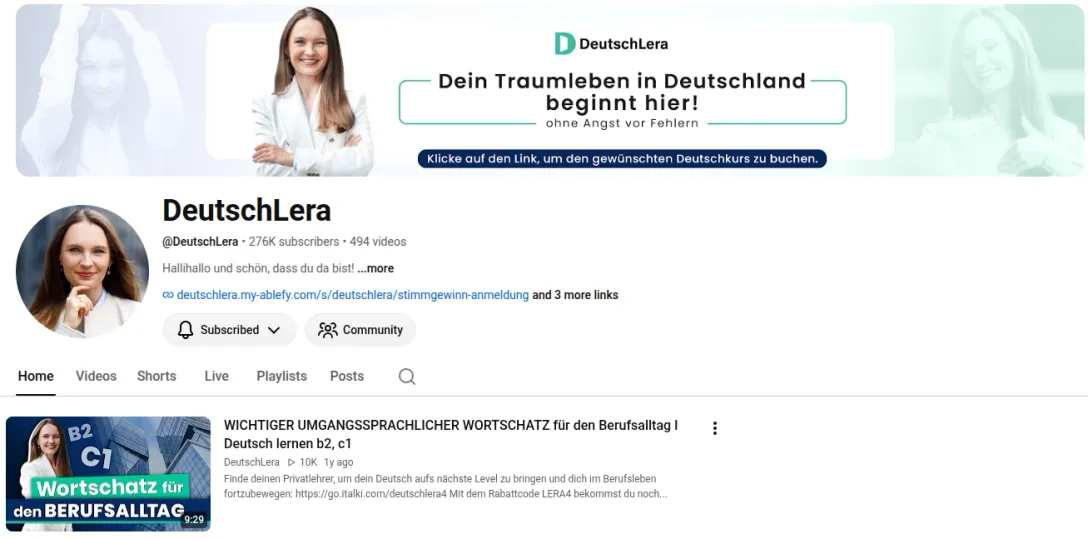
Umgangssprache, the spoken register nobody teaches you, is the set worth seeking out, because it is the gap between passing a B2 exam and following a conversation at work.
This is not a channel to start on. It is the one to move to when the beginner catalogues have stopped teaching you anything.
👉 Check out DeutschLera YouTube channel
What separates a useful German language learning channel from a popular one?
Subscriber count tells you nothing about the fact that a channel can take you from A1 to B1 or not.
What matters is if it’s organised enough that it can lead you into a route you can follow.
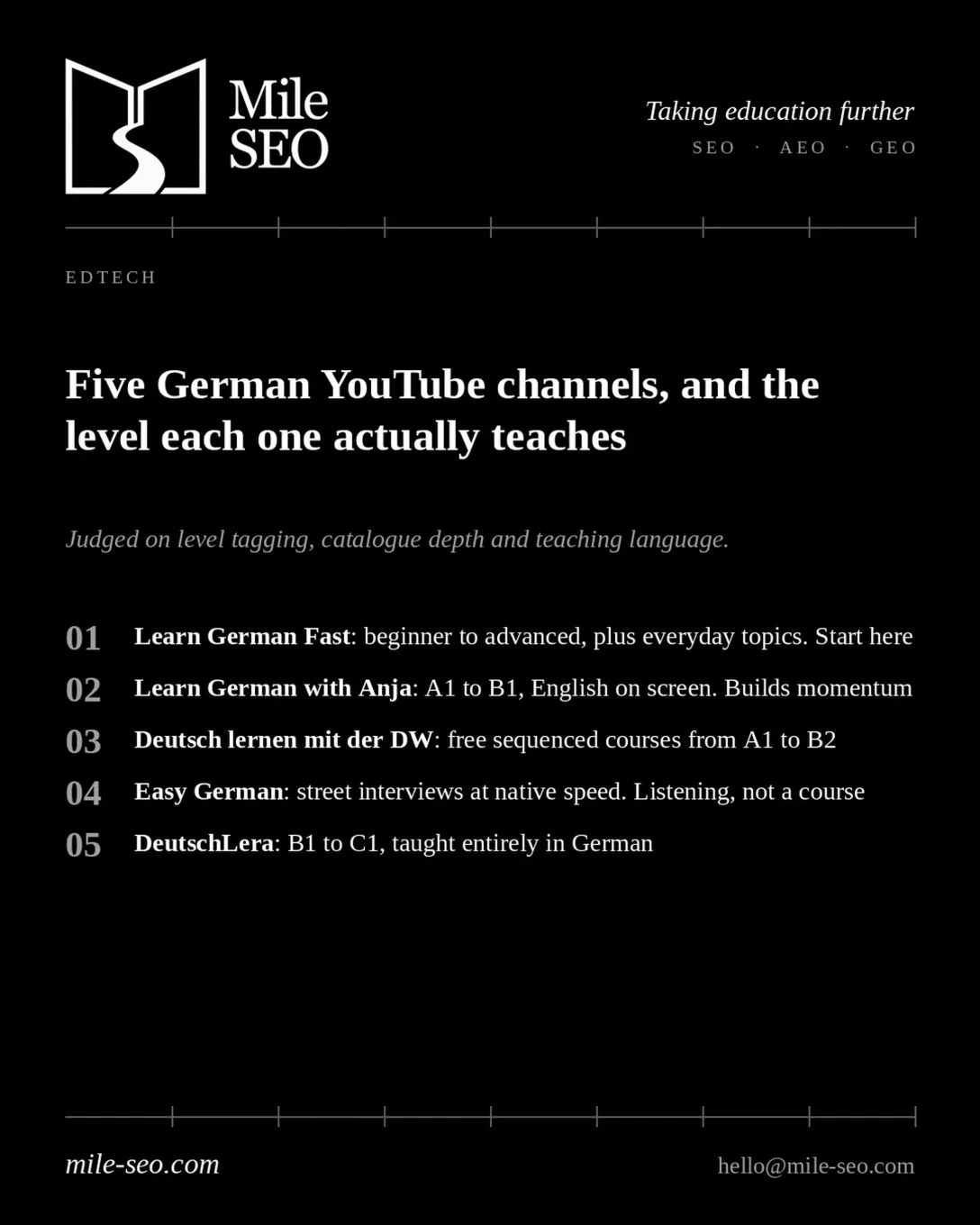
Four things decide if a channel is worth committing to:
- Level tagging: Playlists labelled A1, A2, B1, or at least beginner, intermediate and advanced.
- Depth at your level: Twenty beginner videos is a taster. Two hundred is a course.
- Language of instruction: English explanations move you faster at the start; German-only forces the listening work you need later.
- What comes with the video: Transcripts, worksheets and exercises turn passive watching into something that sticks.
Most of these channels are the free tier of a paid business (Anja runs an academy, Lera runs a language school) which is standard practice for independent course businesses.
It shapes what you get for nothing: the beginner material is usually complete, and the paywall starts exactly where the advanced material does.
Where Mile SEO fits in for teachers, tutors & course creators
Mile SEO is a search consultancy for education: schools, universities and the learning products people find through Google and, increasingly, through AI tools such as ChatGPT, Claude or Gemini.
Channels like these are a reminder of how discovery works: the ones that get recommended are the ones whose catalogue is legible from the outside.
If you build something people learn from and it is not being found, that is the same problem from the other side.
SEO for learning apps is where that work starts, and a 30-minute call is usually enough to tell whether anything is worth fixing.
30 minutes, no charge, no deck.

FAQ
Related questions, not covered above.
- Can you become fluent in German using only YouTube?
- YouTube covers listening and grammar well, but fluency needs speaking. Pair videos with a tutor, language exchange or conversation group so you actually produce German instead of only understanding it.
- Will YouTube lessons prepare me for a Goethe or telc exam?
- They help with listening and grammar, but exams also test writing and speaking under time limits. Work through the exam provider's official practice papers before booking a test date.
- How much time should I study German each day?
- Consistency beats volume. Twenty to thirty minutes daily, plus a quick review of the previous lesson, usually sticks better than one weekend binge of several hours.
- Should I watch German videos with subtitles on?
- Start with English subtitles as a beginner, switch to German subtitles around A2 to B1, then turn them off for short listening checks to see what you really understand.