
Contents
1. Start with SEO: it is the lead source you own
When we’re talking about lead generation for higher education, SEO comes first because it reaches prospective students while they are already searching for a program.
Every lead it produces lands on a page you already control.
The work is honestly unglamorous… but necessary:
- give each program one page that targets one query
- put fees, start dates, entry requirements and deadlines in the page text
A page that ranks still has to capture the lead.
Add a short inquiry form, a named next step such as an advisor call or a webinar, and a direct feed into your CRM.
2. Use newsletters to turn inquiry into application
Newsletters and webinars turn an inquiry into an application by keeping your institution in view through the months between first interest and a decision.
Segment by program interest and stage instead of sending one digest to everyone.
A short sequence after the inquiry works better:
- what the program covers
- how students fund it
- a current student's week
- deadline.
Keep the monthly newsletter for applicants and admitted students.
3. Webinars can turn a lead into a student
Run webinars at program level, hosted by the program director with one or two current students.
Prospects register to hear about a specific degree, not about the institution as a whole.
Record each session and publish the recording with a transcript on the program page.
The page gets fresh, on-topic content, and the next visitor lands on the same registration form, so one event feeds both your nurture flow and your organic ranking.
4. Lead generation for higher education with GEO
GEO is the next layer: it makes the same program pages easy for AI tools to cite when a prospective student asks a question instead of typing a keyword.
Start with prompt coverage.
- list the questions your applicants really ask (such as "best part-time MBA in Toronto with a scholarship")
- run them through ChatGPT, Gemini and Perplexity (and whichever AI tool you want to turn up in)
- log whether you appear and which pages get cited.
Then fix the source pages where you have outdated information or where you have gaps vs your competitorrs.
State fees, duration, start dates, entry requirements and accreditation as plain text, and add structured data such as Course schema.
AI answers can only quote facts they can find, which is why GEO follows SEO: a vague program page gives you nothing to cite. How SEO, AEO and GEO differ is worth reading before you scope the work.
5. Fill the gaps with the rest of the digital marketing mix
Paid search, social lead ads, LinkedIn and events cover what SEO cannot.
Each performs better when it sends people to a page that already converts.
Use paid search for programs with an approaching deadline and no organic ranking yet. Use Meta lead ads for undergraduate audiences and LinkedIn for postgraduate and executive programs, where job title and career stage define the audience.
Retarget visitors who viewed a program page but never submitted the form. Open days and school fairs still produce leads, so tag them by source and drop them into the same nurture sequence as everyone else.
Note: Whatever you run, sync every form into the same CRM so leads from all channels sit in one record.
6. How Mile SEO helps with lead generation for higher education
Mile SEO is a search consultancy for education, and lead generation for universities is mostly a query-ownership problem: which page answers which search, and whether that page captures an inquiry.
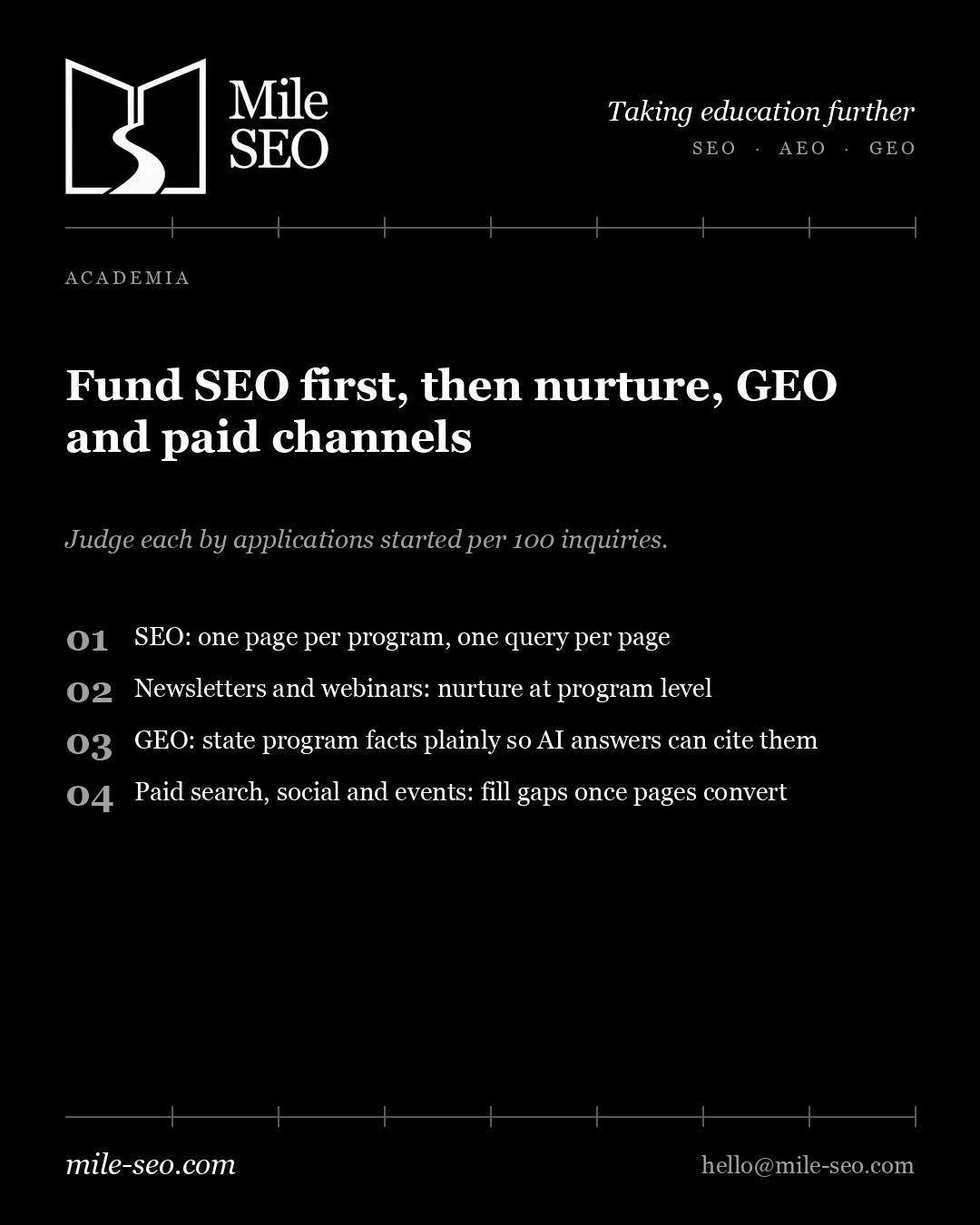
The order that holds up is SEO first, then newsletters and webinars, then GEO, with paid channels filling the gaps.
If you want to see where your program pages stand, a 30-minute call is the first step, followed by a written audit of what ranks, what competes with itself and what to fix first.
30 minutes, no charge, no deck.

FAQ
Related questions, not covered above.
- How long does SEO take to produce student leads?
- Expect several months for new or consolidated program pages to rank, longer for competitive degrees. Plan around your admissions cycle so pages are live before applications open.
- How do undergraduate and postgraduate lead generation differ?
- Undergraduate decisions often involve parents and school counselors, so content must speak to both. Postgraduate and adult learners search alone and respond to program detail and career outcomes.
- Are chatbots and student ambassador chat worth adding?
- They help once program pages already attract visitors. Chat answers questions instantly but only captures people who arrive, so it complements SEO rather than replacing it.
- How do I track leads that come from AI tools?
- Some arrive as referral traffic from AI tools and others as direct visits. Add a "how did you hear about us" field and review referrers monthly.