
Contents
- Blooket: fun, free, educational games
- Gimkit: free modes, assignments and audio
- Wayground: teach any way you want
- Socrative: comprehensive Kahoot alternative
- Mentimeter: work on projects in groups
- Baamboozle: best to capture a young audience
- Which free Kahoot alternative fits your class size?
- Where Mile SEO fits in for learning products
1. Blooket: fun, free, educational games
Blooket's free Starter plan lets you create unlimited question sets and host games for up to 60 players.
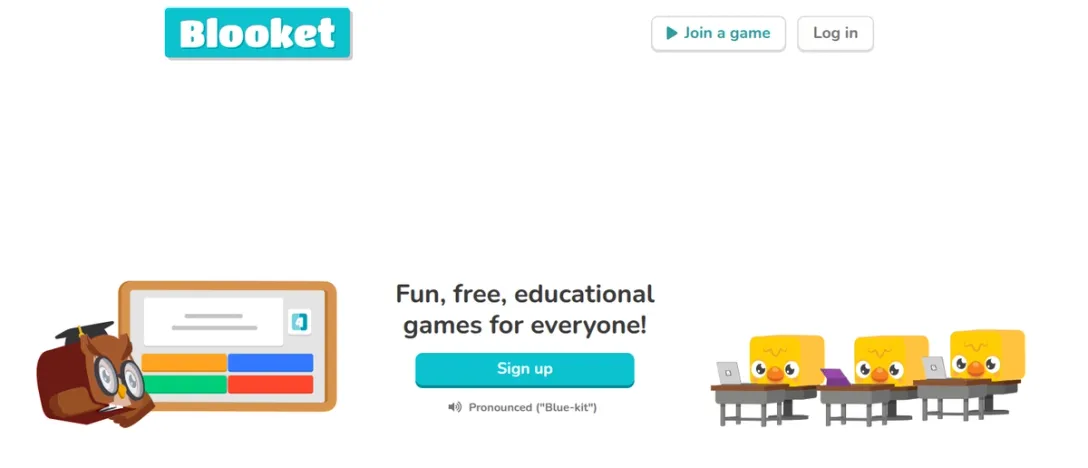
Blooket Plus raises that to 300 players per game (except in Racing and team modes).
The draw is variety: the same question set plays as several different games, so a revision lesson in week 10 does not feel like the one in week 2.
2. Gimkit: free modes, assignments and audio
Gimkit's free Basic plan places no cap on the number of students.
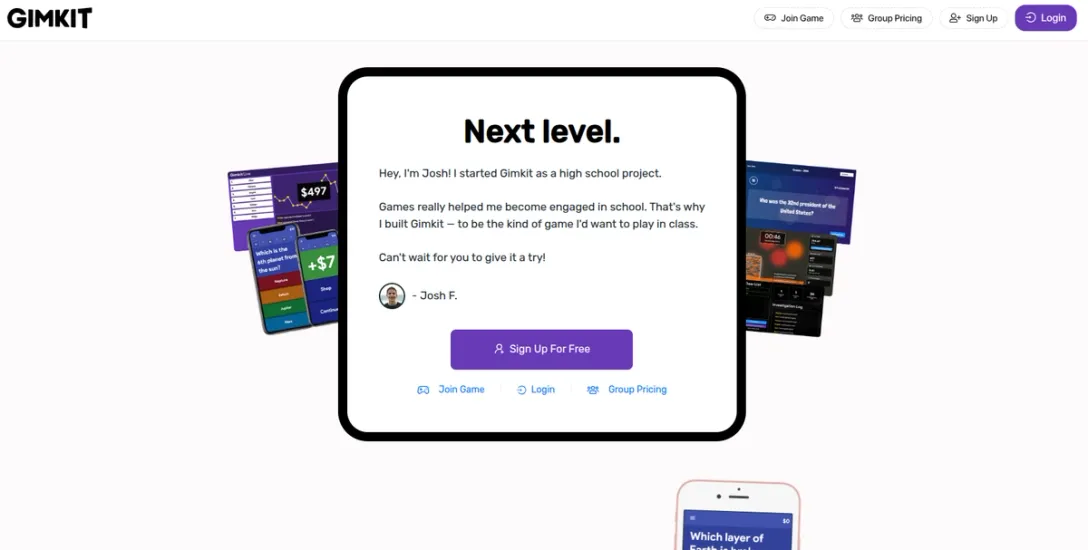
The catch is game modes:
- Basic rotates around three free modes at a time
- Gimkit Pro ($59.88 a year, or $14.99 monthly) unlocks the rest, plus homework assignments and audio on questions.
(Class rostering and reports are included on both plans.)
3. Wayground: teach any way you want
Wayground is the new name for Quizizz, which rebranded in June 2025 as it grew from a quiz tool into a broader learning platform.
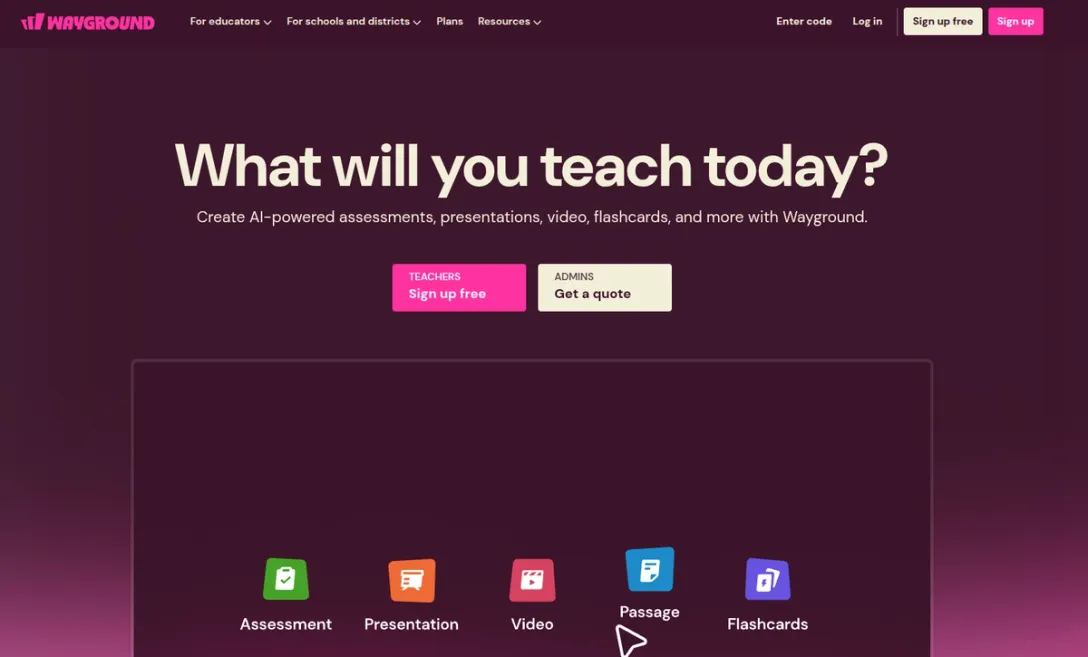
Students work through questions at their own pace, which removes the speed race that leaves slower readers behind.
Quizzes can be assigned to an imported Google Classroom class.
(For the apps students use on their own outside lessons, see the best learning apps for students.)
4. Socrative: comprehensive Kahoot alternative
Socrative's free plan gives you five quizzes, one room and up to 50 students per activity, with 30 days of report history and automatic grading.
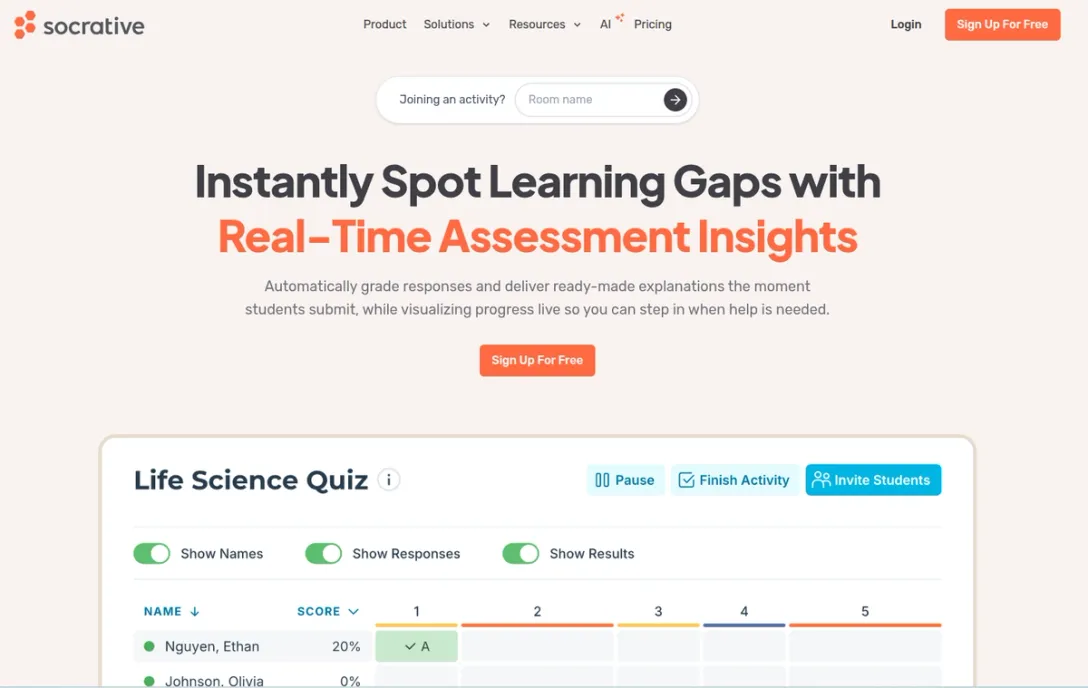
The Essentials plan ($120 a year) adds unlimited quizzes, five rooms and rostered rooms, and Pro takes you to 300 students per activity.
5. Mentimeter: work on projects in groups
For a lecture or an assembly, a polling tool beats a quiz game, and Mentimeter is the usual choice.
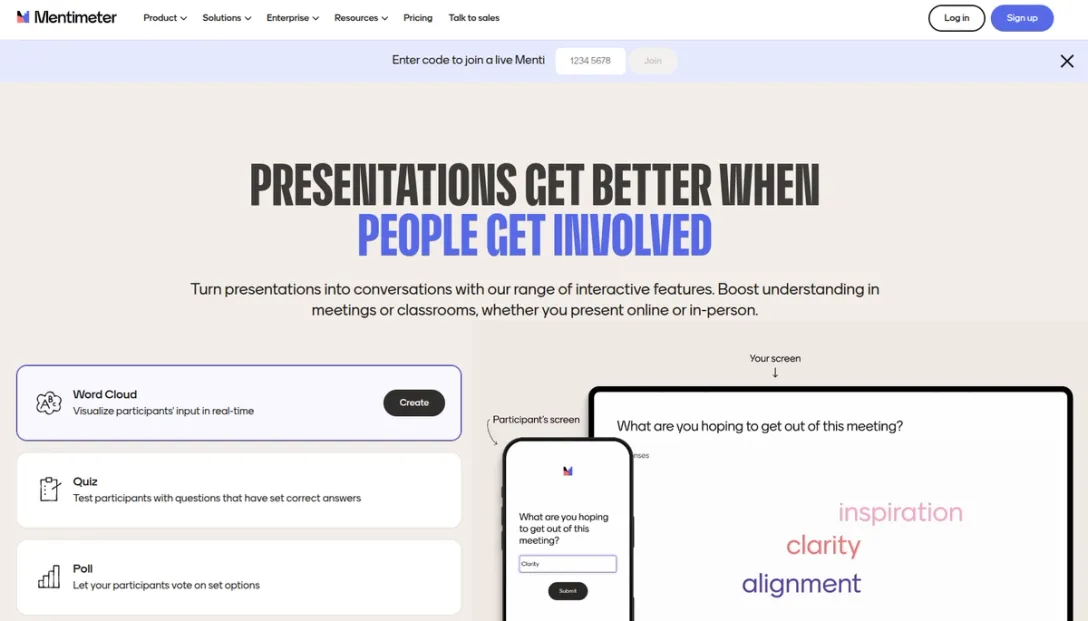
Questions are inside a slide deck, responses appear on screen, and students join with a code.
Mentimeter's plans page lists 50 participants per month on the free tier, resetting on your sign-up date + one session a month with unlimited participants!
The Basic plan then also lets you import PowerPoint, Keynote or PDF files, so an existing lecture deck can carry its polls.
6. Baamboozle: best to capture a young audience
Baamboozle needs no student devices at all.
You project the game, split the class into teams, and teams take turns choosing questions and answering out loud while you mark answers right or wrong on screen.
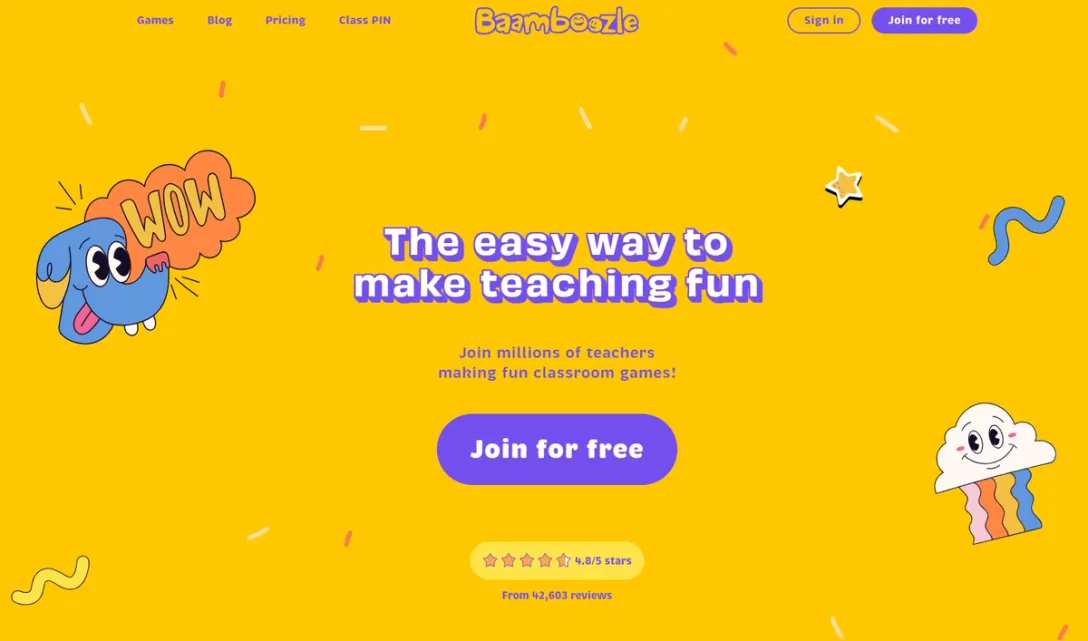
Students need no accounts and no join codes.
That makes it the practical choice for younger pupils, rooms without a device trolley, and schools with phone bans (which are getting more common nowadays). The free plan limits how far you can take it: four teams and up to 24 questions per game, with multiple-choice questions reserved for Baamboozle+ at $59.88 a year.
The trade-off is that every answer is public and spoken, so you lose the individual data a device-based quiz gives you.
Which free Kahoot alternative fits your class size?
The free tiers sort neatly by headcount. Class size is usually the deciding factor in these cases, but I would also factor in the age of the the pupils and/or students.
- Up to 40 students: Kahoot's own free plan still works for K-12, so switch only if you want different game modes.
- Up to 50 students: Socrative free, if you want results you can act on.
- Up to 60 students: Blooket free, for game-style review.
- Any size, free: Gimkit Basic, accepting the rotating game modes.
- Lectures and assemblies: Mentimeter, within its monthly participant allowance.
- No devices: Baamboozle, played in teams on one screen.
Tip: If you teach adults and only need one or two big sessions a term, you may not need a paid plan at all.
Where Mile SEO fits in for learning products
Mile SEO is a search consultancy for education, and learning products are one of its three audiences: platforms like the ones in this article, competing for searches like "kahoot alternatives".
This comparison doubles as one of those teardowns.
Every free-tier figure above came from a vendor's own plans or help page, and most "alternatives" articles in the top results leave those numbers out.
If you run one of these products and want your comparison and pricing pages to be the ones that get cited, SEO for edtech platforms explains how Mile SEO works.
30 minutes, no charge, no deck.

FAQ
Related questions, not covered above.
- Do Kahoot alternatives work without reliable Wi-Fi?
- Most need every student device online, because answers sync live. Baamboozle needs only one connected screen, so it is the safer choice when the classroom network is unreliable.
- Should a school buy a site licence or let teachers use free plans?
- Free plans are fine for trying a tool. A site licence pays off once several teachers use it weekly, since rostering, shared libraries and reporting usually sit there.
- Is Google Forms a reasonable Kahoot alternative?
- For assessment, yes. Forms quizzes are free, mark multiple choice automatically and connect to Google Classroom. Without a live leaderboard, they suit homework better than lesson starters.